Nothing eats into your profit margins like a customer complaint about ruined inventory. When a single red sock turns a whole load of white towels pink, it’s not just a laundry mistake; it’s a financial loss.
Color catcher sheets are specially treated non-woven fabric sheets that act like magnets for loose dyes in the washing machine. They trap stray color particles and dirt floating in the water before they can settle on other clothes, ensuring that mixed colors stay bright and whites remain white.
If you are stocking laundry products for retail or managing a commercial laundry operation, you need to understand how this simple tool can protect fabrics and save labor hours.
What Are Color Catcher Sheets?
Your customers are overwhelmed by the number of laundry additives on the shelf, often confusing one sheet for another.
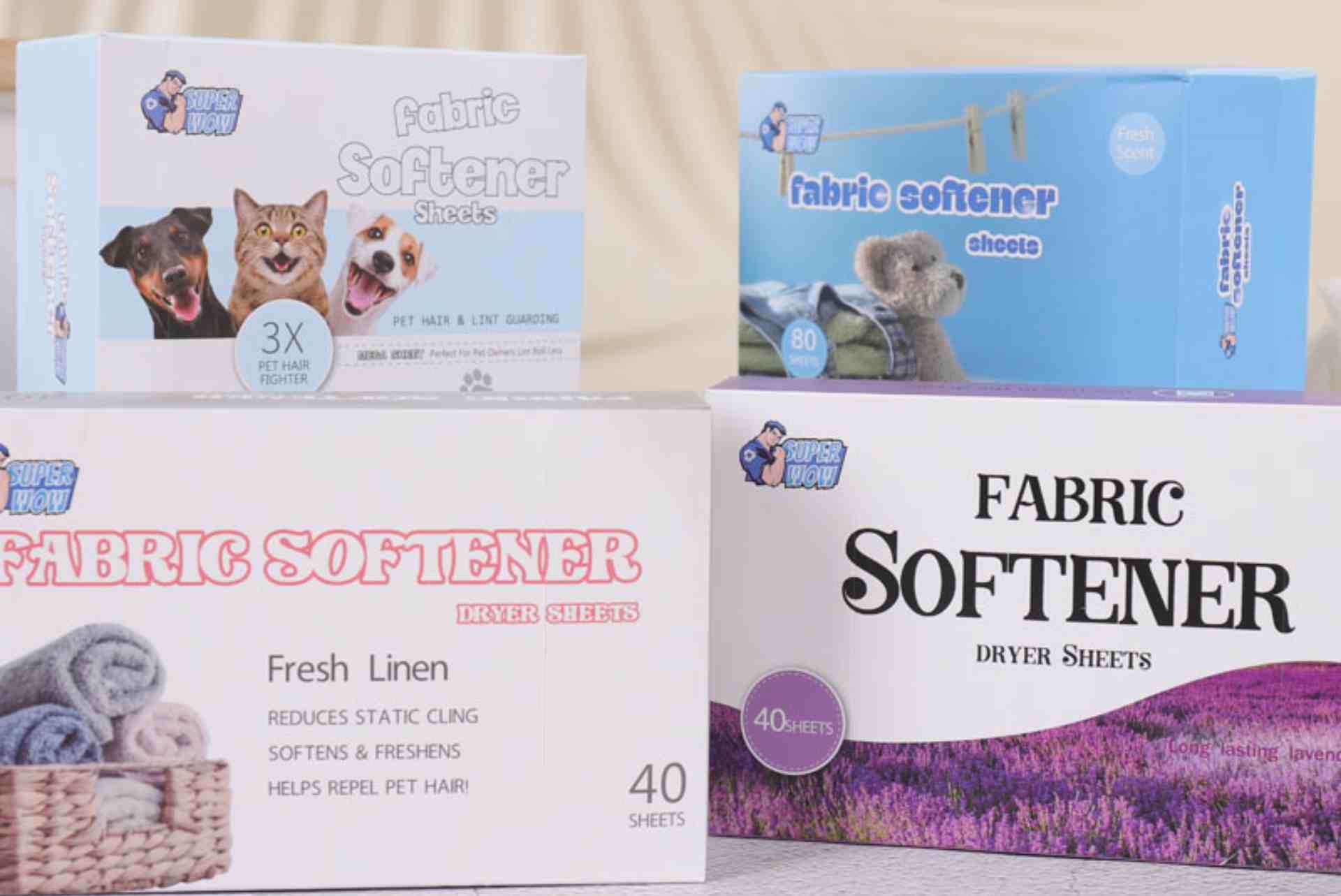
Simply put, these are disposable sheets placed in the washing drum that look similar to dryer sheets but serve a completely different purpose. While dryer sheets soften fabric in heat, color catchers work in water to absorb dye.
Simple Definition and Market Appeal
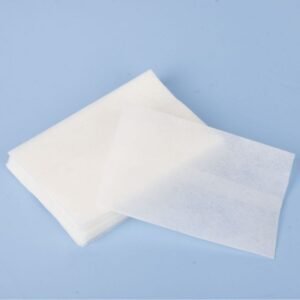
At Sheet Whisper, we define color catcher sheets as the “insurance policy” for laundry. Physically, they are made from a blend of viscose and polyester fibers. They are usually white, unscented, and feel slightly stiff before use. For your B2B clients, they represent a high-margin add-on item. They solve a specific, high-stress problem—ruined clothes—which makes them an easy sell compared to generic detergents.
Why People Use Them Daily
In the fast-paced world we live in, separating laundry into three or four different piles (whites, darks, colors, delicates) is a luxury of time many people don’t have.
Convenience: Families want to throw a mixed load into the machine without fear.
Cost Savings: Running one full mixed load is cheaper than running three small separated loads.
Protection: Even when sorting, hidden dyes in “safe” looking clothes can bleed.
When you source these for your inventory, you aren’t just selling a sheet; you are selling the ability to be “lazy” with laundry while still getting professional results.
The Visual Difference
It is vital to educate your buyers on how to spot the difference between our products.
| Feature | Color Catcher Sheets | Dryer Sheets | Laundry Detergent Sheets |
| Primary Function | Trap loose dye | Soften & reduce static | Clean clothes |
| Used In | Washer (Water) | Dryer (Heat) | Washer (Water) |
| Texture | Absorbent, paper-like | Waxy or fibrous | Dissolvable solid |
| After Wash | Turns colored/grey | Remains same color | Disappears completely |
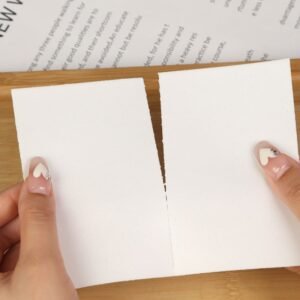
This table helps clarify exactly what you are purchasing. As a supplier, offering a full range—detergent, color catchers, and dryer sheets—creates a complete ecosystem for your customers.
How Do Color Catcher Sheets Work?
We often get asked if these sheets are magic, but the answer is grounded in simple chemistry.
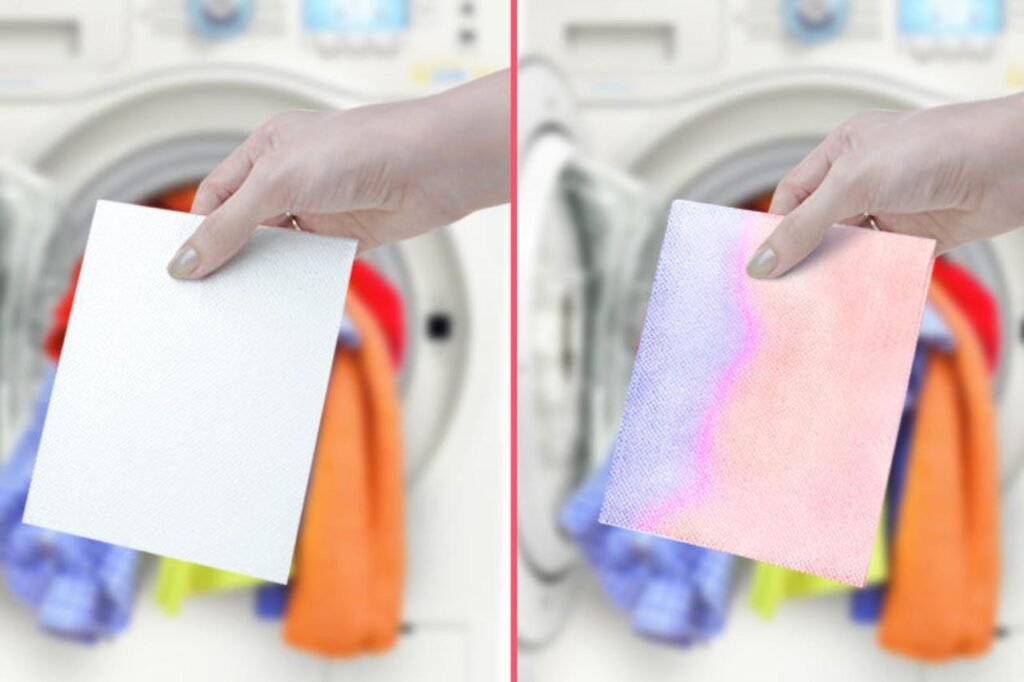
These sheets utilize a cationic (positive) charge to attract anionic (negative) dyes dispersed in water. Like a magnet, the sheet locks in the color molecules permanently so they cannot reattach to other garments.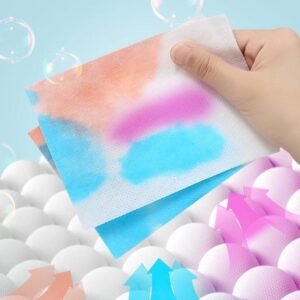
The Science Behind Dye Transfer
To understand why your clients need this product, we have to look at what happens inside the washing machine. Most clothing dyes are negatively charged (anionic). When you wash clothes, hot water and agitation loosen some of these dye molecules, causing them to float freely in the water.
Without a color catcher, these negative ions look for a new home—usually your white shirt or light-colored linens. This is called “redeposition.”
How Sheets Trap Loose Colors
Our sheets at Sheet Whisper are treated with specific ingredients that give them a strong positive charge.
Attraction: As the water circulates, the negatively charged dye particles are magnetically drawn to the positively charged sheet.
Absorption: The sheet’s porous structure traps the dye deep within its fibers.
Locking: Once the dye is trapped, the chemical bond holds it fast. It will not leak back out into the water, even during the rinse cycle.
What Happens in the Washing Machine
It is a race against time. The dye releases, and it will settle on something. Because the color catcher sheet is chemically engineered to be more attractive to the dye than the cotton or polyester of the clothes, the dye “chooses” the sheet.
For commercial buyers, this reliability is key. If you run a laundromat or a hotel laundry service, you cannot afford to have greyish whites. Using these sheets acts as a filter for your water, keeping the wash liquor clear and your textiles pristine.
Chemical Interaction Breakdown
| Component | Charge | Role in Wash | Result Without Sheet | Result With Sheet |
| Loose Dye | Negative (-) | Contaminant | Attaches to other clothes | Attaches to Sheet |
| Cotton Fabric | Neutral/Negative | Victim | Absorbs loose dye | Stays Clean |
| Color Catcher | Positive (+) | Trap | N/A | Permanently locks dye |
Why Do Clothes Lose Color in the Wash?
Faded inventory sitting on shelves means lost revenue, and faded uniforms mean a poor brand image.
Clothes lose color due to high water temperatures, harsh mechanical agitation, and poor dye fixation during the manufacturing process. Excess dye releases into the water, actively looking for a new place to settle.
New Clothes vs. Old Clothes
The biggest culprit for color bleeding is new clothing. Manufacturers often “over-dye” fabrics to make them look vibrant in the store. This excess dye is not chemically bonded to the fabric fibers.
The First Wash: This is the most dangerous cycle. A single new pair of dark jeans can release enough indigo dye to ruin a massive load of laundry.
The Aging Process: Old clothes bleed less, but they are more susceptible to absorbing dye because their fibers are roughed up and porous.
Dark Colors and Bright Dyes
Red and black dyes are notorious in the textile industry. The chemical structures of these pigments are larger and harder to fixate permanently onto fibers. As a B2B buyer, if your product line involves heavy cottons in red, navy, or black, recommending color catchers is essential for customer satisfaction. You don’t want your customers blaming the shirt quality when it was actually a laundry error.
Common Laundry Mistakes That Cause Bleeding
Even high-quality clothes will bleed if mistreated.
Hot Water: Heat opens up fabric fibers, allowing dye to escape.
High pH Detergents: Some heavy-duty detergents are too alkaline, stripping dye along with dirt.
Overcrowding: When a machine is stuffed too full, water cannot flush the loose dye away, trapping it against other clothes.
By understanding these risks, you can position our color catcher sheets as the solution to common user errors. You are helping your customers avoid mistakes before they happen.
| Factor | High Risk | Low Risk |
| Water Temp | Hot (60°C+) | Cold (30°C) |
| Fabric Type | Cotton, Wool, Linen | Polyester, Nylon |
| Garment Age | Brand New | Washed 10+ times |
| Color | Red, Black, Navy | Pastels, Grey, Tan |
Benefits of Using Color Catcher Sheets
Sorting laundry is a labor-intensive process that costs commercial businesses significant money.
The primary benefit is preventing color runs, but they also save significant time by allowing mixed loads. This reduces water usage and energy costs by running fewer, fuller loads instead of many small ones.
Prevents Color Bleeding
This is the obvious benefit, but let’s look at it from a business perspective. If you are a hotel manager, a set of white sheets costing $50 can be ruined by one guest’s sock. The ROI (Return on Investment) of using a $0.10 color catcher sheet to save $50 of inventory is massive. It creates a safety buffer for your textiles.
Saves Time by Washing Mixed Colors
In commercial settings or busy households, time is the most valuable resource.
Without Sheets: You wait to accumulate enough “darks” for a full load, or you run a half-empty machine (wasting money).
With Sheets: You throw everything in together immediately.
For your customers, this means laundry day is finished faster. For a laundromat, it means faster turnover of machines and higher revenue per hour.
Protects Light and White Clothes
Over time, white clothes tend to turn grey. This isn’t always dirt; often, it is microscopic amounts of dye from other clothes settling on the white fibers wash after wash. Color catchers remove these trace amounts of dye from the water, keeping whites brighter for longer. This extends the lifecycle of uniforms and linens, delaying replacement costs.
Reduces the Need for Hand Washing
Many consumers hand-wash items they are afraid will bleed. This is tedious. By using our sheets, you give them the confidence to use the machine for items they previously scrubbed in the sink. This convenience factor is a huge selling point in marketing copy.
Operational Efficiency Table
| Metric | Traditional Laundry | Laundry with Color Catchers |
| Sorting Time | High (5-10 mins/load) | Low (0-1 min/load) |
| Load Frequency | High (Many small loads) | Low (Fewer large loads) |
| Water Usage | High | Optimized |
| Risk of Damage | Moderate | Very Low |
How to Use Color Catcher Sheets Correctly
Even the best product will fail if the end-user doesn’t know how to apply it correctly.
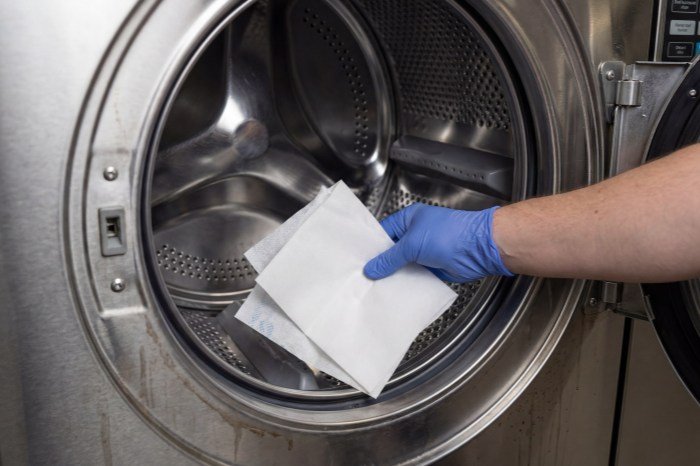
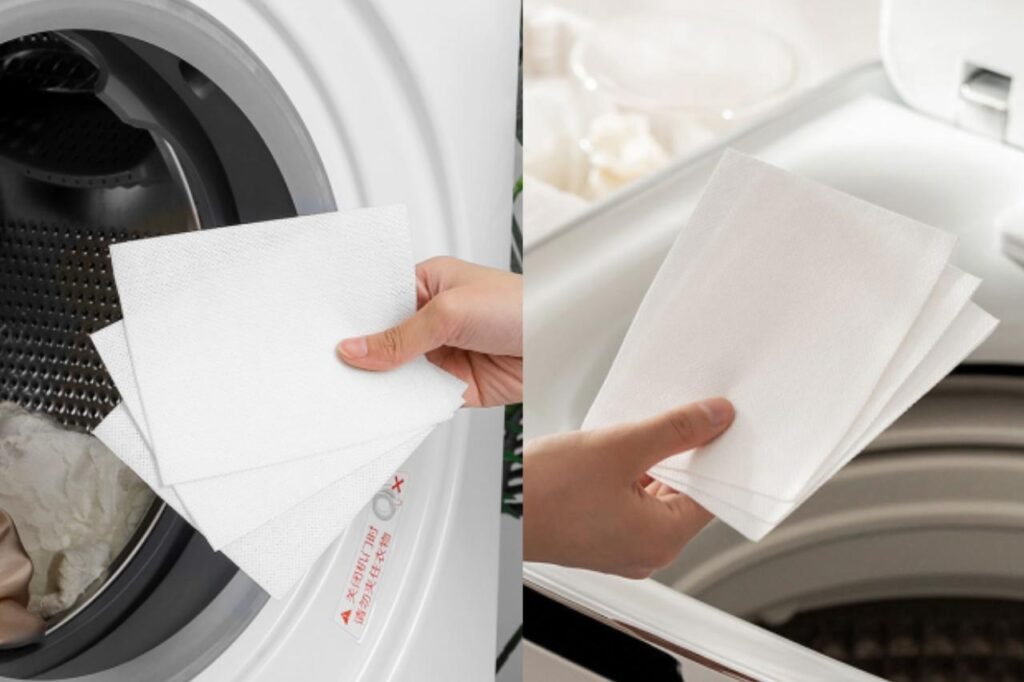
Place the sheet at the bottom of the drum before adding clothes. Use one sheet for normal loads and two or three for large loads or new, dark garments prone to heavy bleeding.
Step-by-Step Guide for First-Time Users
At Sheet Whisper, we recommend providing clear instructions on your packaging. Here is the standard operating procedure (SOP) we suggest:
Unfold: Take the sheet out of the box and unfold it fully. A crumpled sheet has less surface area to catch dye.
Place: Put the sheet at the very back or bottom of the empty washing drum. Do not put it in the dispenser drawer.
Load: Add your laundry on top of the sheet. This ensures the sheet stays in the water flow.
Dose: Add your detergent as usual.
Wash: Run the cycle.
Discard: Remove the sheet immediately after the wash. It will likely be colored—proof that it worked!
How Many Sheets Should You Use?
This is a common question. Using too few sheets for a heavy load is like trying to dry a swimming pool with a paper towel.
1 Sheet: Standard loads, light colors, old clothes.
2 Sheets: Large loads, mixed bright colors (reds/blues).
3+ Sheets: Brand new denim, large commercial loads, or very poor quality dyed fabrics.
Encourage your buyers to bundle sell these. Selling a “heavy duty” pack encourages proper usage.
Can You Reuse a Color Catcher Sheet?
No. Once the chemical sites on the sheet are filled with dye, they cannot absorb anymore. It is a single-use product. Reusing it risks the trapped dye leaking out or simply failing to catch new dye. This disposable nature ensures a recurring revenue stream for you as the seller.
Usage Guidelines
| Load Type | Recommended Sheets |
| Whites & Lights | 1 Sheet (Precautionary) |
| Normal Mixed Load | 1 Sheet |
| Heavy Darks (Jeans) | 2 Sheets |
| New Red/Black Items | 2-3 Sheets |
| Commercial 15kg+ Load | 3-4 Sheets |
Color Catcher Sheets vs Sorting Clothes
Is the age-old laundry rule of separating darks and lights finally dead?
While sheets allow for mixed washes, sorting is still safer for extremely new, heavily dyed items. Sheets bridge the gap, offering security for “lazy” loads or accidental mix-ups.
Traditional Laundry Sorting Explained
For decades, the golden rule was strict segregation. This method is effective but inefficient. It requires space for multiple hampers and time to separate items. In a small apartment or a busy hotel laundry room, having piles of sorted clothes waiting for a wash is a logistical nightmare.
When Color Catcher Sheets Are Better
For 90% of daily laundry, the sheets are superior because of the efficiency gain.
The “One-Sock” Scenario: You have one pair of dirty jeans and a pile of lights. You don’t want to run the machine for just jeans. The sheet lets you combine them.
Patterned Clothes: How do you sort a shirt that is striped black and white? You can’t. Color catcher sheets are the only solution for patterned items to prevent the black stripes from bleeding into the white ones.
When You Should Still Sort Clothes
We value honesty at Sheet Whisper. If you have a brand new, cheap red tie-dye shirt, do not wash it with your wedding dress, even with a sheet.
Saturation Point: Every sheet has a limit. If the water becomes literally opaque with dye (like washing raw denim), the sheet might get overwhelmed.
Best Practice: For the very first wash of a heavily dyed item, wash it alone or hand wash it. Use the sheets for the second wash onwards or for general mixed loads.
Sorting Strategy Matrix
| Scenario | Sort Strictly | Use Sheet + Mix |
| Brand New Raw Denim | Yes | No |
| Striped/Patterned Items | Impossible | Yes (Essential) |
| Standard Weekly Load | No | Yes |
| Expensive White Linens | Yes (Recommended) | Yes (As backup) |
Are Color Catcher Sheets Safe?
Safety is a top priority for B2B buyers, as they are liable for the products they sell to consumers.
Yes, they are safe for all washing machines, including septic systems. They are hypoallergenic and fragrance-free, making them suitable for sensitive skin and baby clothes.
Safety for Skin and Sensitive Users
Since color catcher sheets do not dissolve, they do not leave chemical residue on the clothing fibers like detergents do. They trap the chemicals (dyes) inside themselves.
This makes them an excellent choice for people with:
Sensitive skin.
Allergies to fragrances.
Babies and infants.
Marketing them as “Hypoallergenic” or “Skin Safe” adds value to your product listing.
Safety for Washing Machines
A common fear is that the sheet will clog the drain.
Structural Integrity: Our sheets are designed to withstand high agitation without tearing or disintegrating. They come out in one piece.
Drain Safety: Unlike coins or buttons, a sheet is soft and moves with the water. However, users should always remove them after the wash so they don’t dry in the drum (which can block air vents in combo machines).
They are safe for Front Loaders, Top Loaders, and High-Efficiency (HE) machines.
Environmental Impact and Disposal
Most color catcher sheets are biodegradable (depending on the specific fiber blend you order from us). Because they allow users to run fuller loads, they indirectly contribute to environmental sustainability by reducing water and electricity consumption.
Disposal: Currently, they are disposed of in general waste.
The Green Angle: Focus on the energy saved by doing fewer loads of laundry.
Safety Certifications
| Concern | Verdict | Explanation |
| Septic Safe | Yes | Does not effect bacteria in septic tanks |
| Baby Safe | Yes | Traps irritants (dyes) away from clothes |
| HE Machines | Yes | Does not create suds or foam |
| High Temp | Yes | Effective in hot and cold water |
Common Myths About Color Catcher Sheets
In the B2B world, objections are just questions that haven’t been answered yet.
They do not replace detergent; they only trap dye. They are not reusable sponges. They do not damage clothes but rather protect the fabric integrity.
“They work only once”
Fact: This is true, but often framed as a negative. It is a feature, not a bug. Just like a water filter needs changing, the sheet fills up. If it worked forever, it would mean it wasn’t actually holding onto the dye tightly. The single-use nature ensures maximum performance every time.
“They replace detergent”
Fact: This is a dangerous myth. Color catchers have zero cleaning power. They do not remove stains, grease, or odors. They must be used alongside your regular detergent or our laundry detergent sheets. Think of detergent as the soap and the color catcher as the shield.
“They damage clothes”
Fact: The opposite is true. By removing loose dye and minerals from the water, they prevent clothes from looking dull. The sheet is soft and non-abrasive. It tumbles gently with the clothes and will not snag zippers or buttons.
Myth vs. Reality Table
| Myth | Reality |
| “It’s just paper” | It is chemically treated viscose fabric. |
| “I can dry with it” | You can, but it won’t do anything in the dryer. |
| “It catches dirt too” | Yes, it traps soil floating in the water. |
| “It ruins the machine” | No, it is safe for all standard machines. |
Who Should Use Color Catcher Sheets?
Identifying your target market is the first step to successful sales.
They are essential for busy families, students in dorms, travelers with limited luggage, and commercial laundries looking to streamline operations and protect client garments.
Busy Families
Parents do not have time to sort five loads of laundry a week. They need to grab the kids’ uniforms, the soccer jersey, and the towels and wash them all at once. Marketing these sheets as a “Time Saver for Moms and Dads” is a winning strategy.
Small Apartments and Shared Laundry Rooms
People living in cities often have to pay per load at a laundromat or have small portable washers.
Cost: Paying $5.00 for a wash means you want to stuff that machine full. You can’t afford to run a separate load for three red shirts.
Space: No room for multiple hampers.
This demographic buys out of necessity and budget management.
Travelers and Dorm Students
College students are notorious for ruining laundry. A pack of color catcher sheets is a great “going away” gift.
Travelers washing clothes in hotel sinks or local laundromats also benefit because they have limited wardrobes and cannot risk ruining their only pair of pants.
Commercial Applications
If you supply:
Hotels: Protects white towels from guests’ personal items.
Gyms: Protects white towels from dark gym shorts.
Uniform Rental: Keeps logos sharp and backgrounds bright.
For these clients, buy in bulk and emphasize the “Asset Protection” angle.
Target Audience Needs
| Audience | Primary Pain Point | Solution |
| Parents | No Time | Wash mixed loads instantly |
| Students | No Skill/Money | Foolproof laundry protection |
| Hotels | Asset Loss | Prevent grey/stained linens |
| Travelers | Limited Clothes | Protects capsule wardrobe |
Tips for Best Results With Color Catcher Sheets
To keep your customers happy and returning for re-orders, you need to educate them on best practices.
Always unfold the sheet completely for maximum surface area. Store in a dry place to maintain the positive charge. Pair with a high-quality detergent for optimal cleaning.
Using Sheets with New Clothes
We advise a “double defense” strategy for brand new items.
Turn the new item inside out (reduces friction).
Use two color catcher sheets.
Wash on cold water.
This combination ensures that the massive release of dye from the first wash is managed effectively.
Combining Sheets with the Right Detergent
The sheet handles the dye; the detergent handles the dirt. For the best results, use a pH-neutral detergent. Avoid using bleach with color catchers, as bleach can interfere with the sheet’s ability to trap dye effectively. Our sustainable laundry solutions are formulated to work in perfect harmony with these sheets.
Storage Tips to Keep Sheets Effective
Since these sheets are absorbent, humidity is their enemy.
Keep the Box Closed: Do not leave sheets exposed in a damp laundry room.
Shelf Life: Properly stored, they last for years. This makes them excellent for wholesale warehousing—no expiration dates to worry about.
Dry Hands: Always handle with dry hands so you don’t activate the sheet prematurely.
Best Practices Summary
| Action | Do | Don’t |
| Preparation | Unfold sheet fully | Ball it up |
| Placement | Back of drum | Front door seal/dispenser |
| Storage | Cool, dry box | Humid, open shelf |
| Pairing | Standard Detergent | Chlorine Bleach |
Conclusion
Color catcher sheets are a low-cost, high-value tool that saves time, prevents damage, and simplifies laundry for everyone. Ready to add this essential product to your catalog? Contact Sheet Whisper today for bulk pricing and protect your inventory.